clearfix
clearfix
Checking Vehicle Fuses
Car Fuse boxes are getting smaller, in hard to get at places and with micro numbering, this makes it very difficult to check them. Sometimes the owner’s manual can be misleading and if it is an immobilizer/alarm problem the fuse may not even be listed for security reasons.
I find the quickest and easiest way to test fuses is with a meter; these are very cheap to buy and are so useful.
Steps To Check Fuses Watch Video
1. Set meter to DC volts 0-20v etc.
2. Turn on the circuit you want to test (note if testing fuel pump fuse, might only be live for a few seconds unless engine is turning)
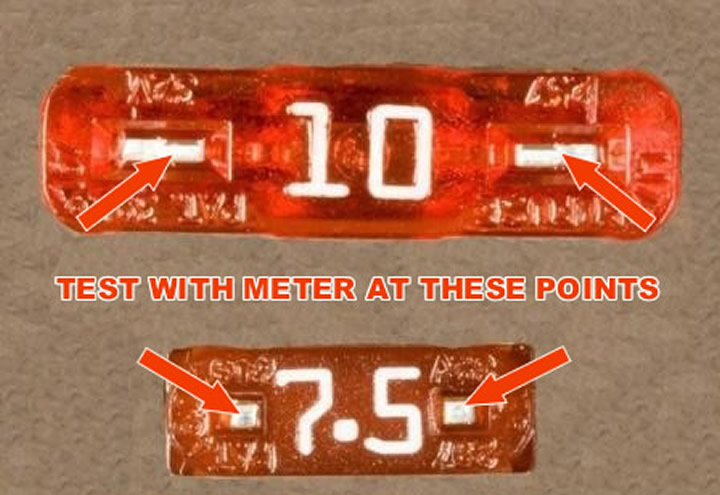
3. Attach the black probe to a good earth point and then with the red probe check for voltage the metal points on top of each fuse, you should have the same reading (12volts) at both points on the fuse, if only voltage at one side, the fuse is blown.
Note you may find a fuse with no voltage at either side this is fine, unless you think that this is the fuse for the circuit you want to check, (example headlight fuses will normally be dead unless the headlights are switch on). If the fuse for the circuit you are testing is dead you now need to start looking at switches, relays and fuse boxes etc..
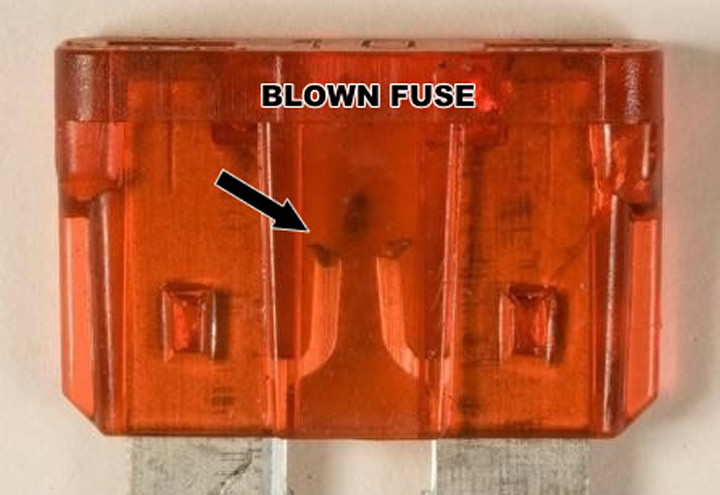
Blown Fuse Click here for fuse colours
We can now lower the enclosure back onto the tray re-fit the screws and remove excess silicon and tidy up the remaining. We now need to seal the corners from the outside, don’t seal on the inside of the corners, this will allow any water that has got between the sides and the corners to run out into the tray and not get trapped or seep out (see picture).